A Second Income in Uncertain Times: Building Farmland Income While You Keep Your Job
When One Salary Is No Longer Safe
There was a time when a steady job felt like security. Work hard, collect your salary, and your family was provided for. That era is ending. In today’s Pakistan, relying on a single paycheck has quietly become one of the riskiest financial positions a family can be in, and millions are feeling it.
Prices rise faster than salaries. Companies downsize and restructure with little warning. And as one Islamabad teacher recently put it, “One salary is not enough, and in many cases even two salaries are not enough.” The result is a nationwide scramble for a second income, after-hours tutoring, Facebook Marketplace selling, ride-hailing, freelance work, as people try to close the gap.
But most of these second incomes come at a brutal cost: your time, your rest, and your family. This article is about a different kind of second income, one that can grow quietly in the background while you keep your job, without turning your life into an endless double shift. It is the second income that comes from owning farmland.
Why One Income Is Now a Risk
This is not pessimism, it is what Pakistan’s own data shows. The pressure on single-income households has reached levels not seen in a generation:
| Pakistan's Income Squeeze (2025–26) | The Number |
|---|---|
| Unemployment rate (FY26), highest in 21 years | 7.1% |
| People unemployed in Pakistan (up from 4.5 million) | 5.9 million |
| Poverty rate, an 11-year high (was 22% in FY19) | 29% |
| Income inequality | 27-year high |
| Labour force working in the informal, insecure sector | ~65% |
| Extra hours people add after an 8–9 hour workday | 3–5 hours |
Unemployment is at its highest in 21 years, with nearly 6 million Pakistanis out of work and poverty at an 11-year high. Employers can restructure or downsize with little notice. In an economy like this, depending on a single salary is not stability, it is exposure. The families who feel secure are the ones with more than one stream of income.
The Problem with Most “Second Incomes”
The instinct is right, build a second income. But the usual methods quietly create a new problem. Reports show people adding three to five hours of side work on top of an eight- or nine-hour job, every day. A second income earned this way is really just a second job, and it comes with a heavy price:
- It consumes your time: the hours that should go to rest and recovery go to more work instead.
- It costs your family: evenings and weekends with your children disappear into the side hustle.
- It leads to burnout: two jobs with no recovery is not sustainable for long.
- It builds no asset: the moment you stop working, the income stops too, you own nothing underneath it.
A good second income should reduce your stress, not multiply it. It should work for you, not run you into the ground. That is exactly where farmland is different.
A Different Kind of Second Income: Farmland
Farmland income does not depend on you clocking a second shift. When your land is cultivated and managed, by professional services or a caretaker, it produces income largely on its own, while you continue your career uninterrupted. You provide the asset and the oversight; the land does the earning.
Crucially, farmland income is independent of your job and your industry. If your sector slows, if layoffs hit your company, your farmland keeps producing, because it is tied to food and land, not to your employer. This is what real income diversification looks like: two streams that do not rise and fall together, so one can catch you if the other stumbles.
The Key Difference
A side hustle trades more of your time for more money, so it ends the day you run out of hours or energy. Farmland trades an asset you own for income, so it keeps paying while you work, while you rest, and even after you retire. One is a second job. The other is a second income.
How Farmland Actually Pays You
Farmland is not a single income stream, it is several, and you can start with whichever suits your situation:
- Seasonal crops: wheat, pulses, and vegetables produce harvest income each season. See the most profitable crops to grow in Pakistan.
- Orchards: fruit trees deliver recurring, higher-value income year after year once established.
- Leasing: lease your land to a working farmer and earn a rental income with almost no involvement.
- Livestock and more: add poultry, dairy, or beekeeping as managed add-ons for extra streams.
- Appreciation: beneath all of this, the land itself rises in value – a second income today and a growing asset for tomorrow.
For a deeper look at this, see our guide on passive income from farmland.
“But I Have No Time and I'm Not a Farmer”
This is the exact objection that farmland income is designed to answer. You do not need farming experience, and you do not need to quit or neglect your job:
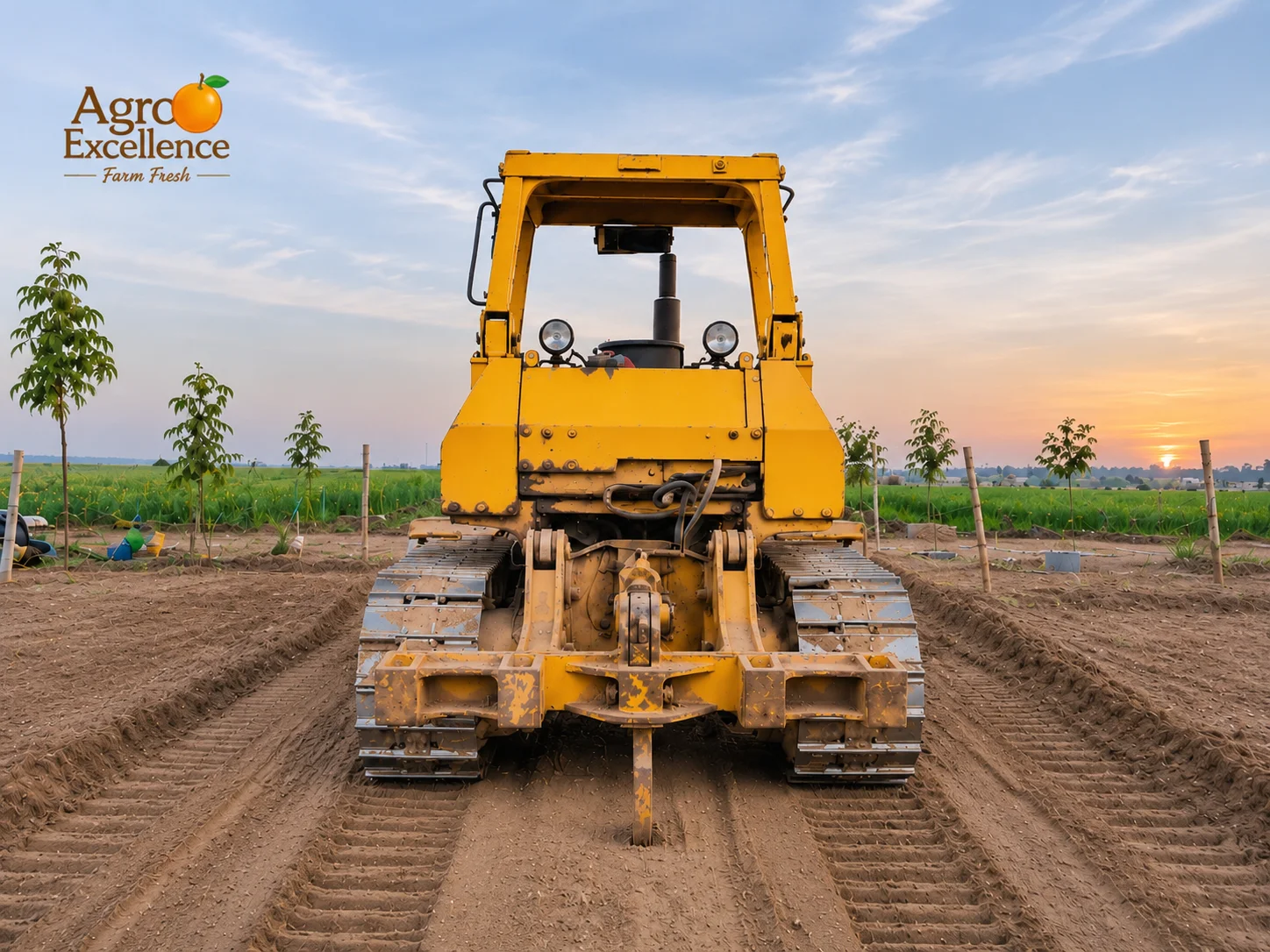
- Managed farming services: We have professional teams that handles cultivation, irrigation, and harvesting, so you gain the income without the daily labour.
- Modern, low-touch systems: solar tube wells and drip irrigation keep land productive without constant presence. See how to maximise yield from every kanal.
- Start small: even a modest plot can generate a meaningful second income, and you can scale as you grow comfortable.
- Weekend involvement only: stay as hands-on or hands-off as you like, visit on weekends, or simply review the results.
In other words, farmland fits around your job instead of competing with it. You can even grow it into a lasting family business over time.
A Side Hustle vs Farmland Income
| Factor | A Typical Side Hustle | Farmland Income |
|---|---|---|
| Your time | Costs 3–5 extra hours daily, a second shift | Runs largely without your hours when managed |
| Effect on family | Steals rest and time with your children | Can become a shared family asset, not a thief of time |
| Job dependence | Often tied to the same skills/economy as your job | Independent of your employer and sector |
| Burnout | High, two jobs, little recovery | Low, oversight, not daily labour |
| Builds an asset? | No, income stops when you stop | Yes, you own appreciating land underneath it |
| Longevity | Ends the day you can't keep up | Keeps earning for years, even in retirement |
How to Build Your Farmland Income, Step by Step
- Secure the right land: choose developed, water-secure, verified farmland in a managed community, the foundation of reliable income.
- Set up managed cultivation: arrange professional farming or a caretaker so the land produces without your daily time.
- Start with reliable crops: begin with dependable seasonal crops, then add orchards for recurring, higher-value returns.
- Reinvest and diversify: add leasing, livestock, or more land as your confidence and returns grow.
- Keep your job and your options: let the farmland income build quietly alongside your salary, giving you security and, one day, a choice.
Why Agro Excellence Farms Makes This Practical
A second income from farmland only works if the land is genuinely productive and does not demand your constant presence. Agro Excellence is built for exactly that:
- Managed and secure: as a gated, master-planned community with on-ground management, your land is cultivated and protected while you work in the city.
- Water-secure and fertile: solar tube wells plus River Tarap irrigation keep the land productive year-round, reliable output means reliable income.
- Close to Islamabad: about 75 minutes away, so weekend oversight is easy and you never have to choose between your job and your land.
- Multiple income options: fertile Talagang land supports crops, orchards, and livestock so you can build the income mix that suits you.
- A productive, appreciating asset: you earn a second income today while owning land that grows in value for tomorrow.
Don't Trade More Hours - Own an Income
In uncertain times, the goal is not simply to earn more, it is to earn more without surrendering your time, your rest, and your family to do it. A second job can do the first; only an income-producing asset can do both. That is the quiet power of farmland.
While others burn their evenings on a second shift that ends the moment they stop, you can own land that earns while you work, rests when you rest, and keeps paying for years to come. Keep your job, keep your time, and let your land build the second income that makes your family secure. In an economy where one salary is no longer enough, the smartest second income is the one you own, not the one you grind for.