How to Buy Agricultural Land in Pakistan?
Buying agricultural land in Pakistan isn’t just a financial decision; it’s an emotional one too. For many families, owning farmland in Pakistan means stability, food security, and generational wealth. Whether you want to cultivate profitable crops, invest in farming land, or simply hold a plot as a long-term land investment, farmland remains one of the safest assets in the country.
But let’s be honest. The agricultural land purchase process in Pakistan can feel overwhelming. Between confusing land laws, hidden disputes, and fluctuating land rates, first-time buyers often struggle. That’s why we’ve prepared this complete guide tailored for people who want to buy agricultural land in Pakistan with confidence, especially in fertile hubs like Punjab.
1. Know Your Purpose Before You Buy Agricultural Land
The first question you should ask yourself is simple: Why am I buying this land? Your answer shapes everything from location to budget.
- For Farming: If your dream is to grow profitable crops, look for fertile soil and reliable water sources. For instance, Punjab’s irrigated fields are perfect for wheat, sugarcane, and rice.
- For Leasing: Many investors prefer to rent their agricultural land to local farmers. It’s a great way to generate a steady income without getting into day-to-day farming.
- For Long-Term Investment: With land prices rising each year, buying farming land near growing areas like Punjab, Rawalpindi or Chakwal means you’re holding an asset that will appreciate naturally.
So, always match your goal with the type of agricultural land available in that region.
2. Research the Best Place to Buy Agricultural Land in Pakistan
Not all land is created equal. Some regions are fertile and irrigated; others rely only on rain. That’s why location is the most critical factor in any land purchase.
Top Regions for Farmland in Pakistan
- Punjab: The food basket of the nation, famous for wheat, sugarcane, and rice. If you’re searching for agricultural land for sale in Punjab, you’ll find the best irrigation system and market access. Specifically, Talagang in Chakwal District, which is known for barani farmland (rain-fed land). It’s more affordable and great for wheat, pulses, and livestock. Many investors are now looking at agricultural land for sale in Talagang due to its future potential.
- Sindh: Known for crops like rice, sugarcane, and cotton. The province has fertile plains suitable for large-scale cultivation.
- KPK: Good for growing orchards, maize, and seasonal vegetables. Its climate supports diverse small to medium farming.
- Balochistan: Produces dates, apples, and pomegranates. However, limited water access often creates challenges for farmers.
3. Understand the Types of Agricultural Land
Pakistan’s farmland is categorized into different types, and knowing the difference helps you decide wisely.
- Irrigated Land: Supported by canals or tube wells. Expensive but highly productive.
- Rain-Fed (Barani) Land: Relies on rainfall. Cheaper but less predictable. Common in Talagang and Chakwal.
- Orchards & Speciality Farming Land: Used for fruits like mangoes, oranges, and guavas. It gives a high return on investment.
4. Budgeting & Agricultural Land Price in Pakistan
Agricultural land for sale in Pakistan comes at very different prices depending on the region and other factors. These include water availability, soil fertility, proximity to cities or markets, road access, and even government development projects in the area.
But keep in mind, the cost of land is not the only expense. You’ll also need to consider additional expenses such as
- Land registration fees
- Stamp duty & taxes on agricultural land in Pakistan
- Lawyer charges for document verification
- Installation costs (tube wells, fencing, boundary walls)
Always keep at least 10 – 15% extra in your budget for unexpected costs. If you want to get the best agricultural land in Pakistan that is fertile and has all the necessary facilities at a reasonable price, you can contact us. Our team will guide you through the process and help you secure land that truly matches your needs.
5. Verify Ownership & Documents Required to Buy Land in Pakistan
One of the biggest reasons for land disputes in Pakistan’s agriculture sector is unclear documentation. Before you pay even a single rupee, make sure you verify:
- Fard-e-Malkiat (Ownership Document): Get it from the local revenue office.
- Mutation Record (Intiqal): Shows how the land was transferred to the seller.
- Khasra & Khatooni: Define boundaries and land details.
- No Objection Certificate (NOC): Required in some areas.
- CNIC copies of buyer & seller.
Never skip this step. Fake documents and double sales are sadly common in rural land deals. Always cross-check with the Patwari or Tehsil office.
6. Inspect the Land Physically Before Buying
You can’t judge farmland just by looking at papers. Visit the site (or send a trusted person) and check:
- Soil fertility (dark, soft soil is ideal).
- Availability of water (canal or tube well).
- Road access for tractors and trucks.
- Nearby markets or mandi for selling crops.
- Whether the boundaries are marked clearly.
Agro Excellence Farms offers pre-verified farming land in Talagang, Punjab, so you don’t have to worry about hidden surprises.
7. Negotiate the Price & Finalize the Deal
Agricultural land rates in Pakistan are usually negotiable. Don’t jump at the first quote.
- Compare prices of similar plots in the area.
- Don’t reveal your budget too early.
- Take a local farmer or consultant with you they’ll know the fair rates.
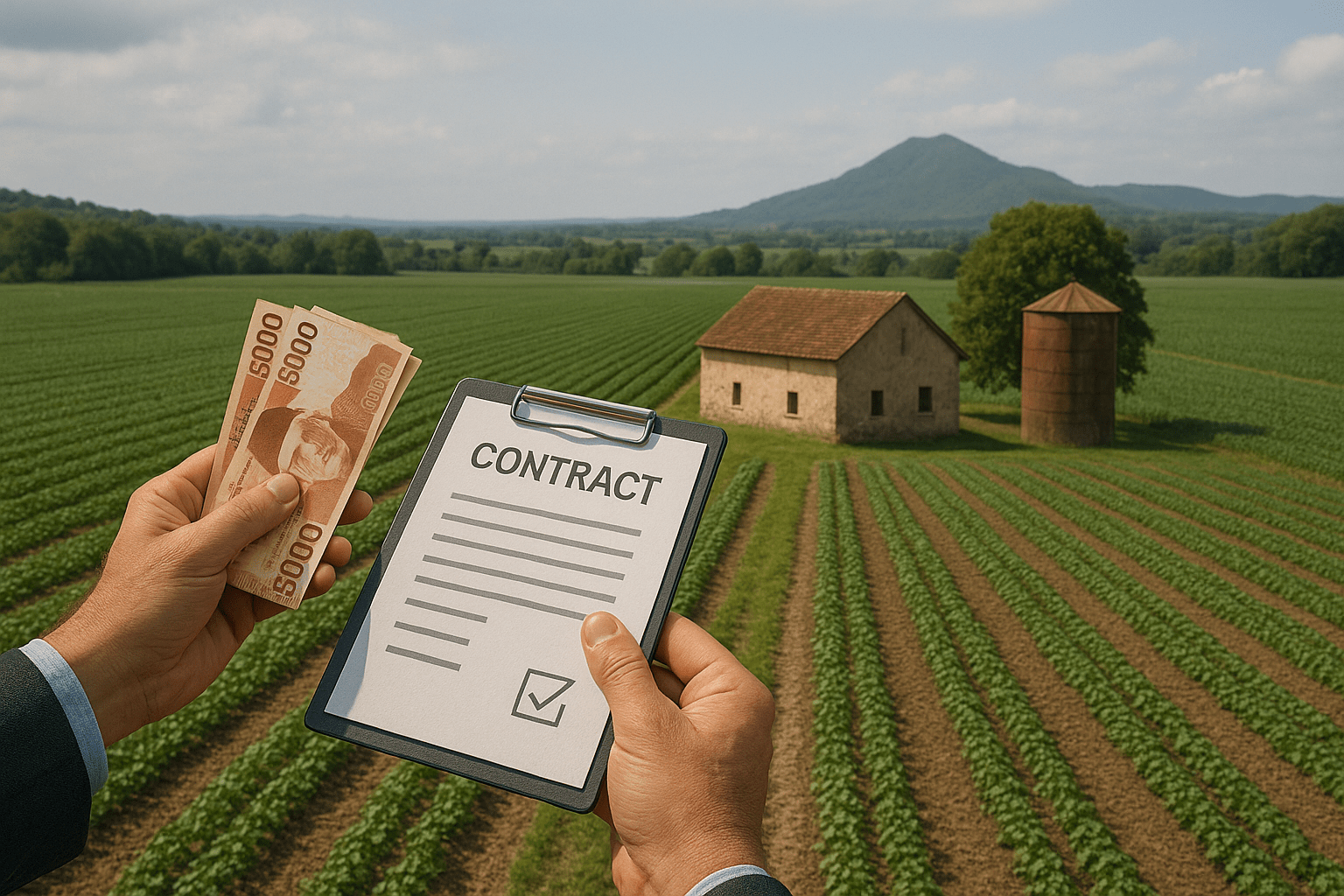
Once you agree, draft a Bayana Agreement (token money agreement) with clear details: land size, total price, deadlines, and penalties.
8. Complete the Land Purchase Process in Pakistan
After negotiation, follow the official land purchase process in Pakistan:
- Draft a Sale Deed.
- Pay stamp duty & registration fees.
- Register the deed with the Sub-Registrar’s office.
- Get the mutation (Intiqal) done in your name. This is the final step in the transfer of land ownership in Pakistan.
Without mutation, you’re not the legal owner, no matter how much you paid.
9. Taxes on Agricultural Land in Pakistan
Unlike urban property, taxes on agricultural land in Pakistan are relatively low. Here’s what you’ll pay:
- Stamp Duty: ~3% of land value.
- Capital Value Tax (CVT): 2%.
- Registration Fee: ~1%.
- Withholding Tax: Shared between buyer and seller.
Agricultural income is also taxed differently across provinces, often at a much lower rate.
10. Secure & Maintain Your Land
Once you’ve bought your farmland in Pakistan, secure it properly.
- Build a boundary wall or fencing.
- Hire a caretaker if you live far away.
- Install tube wells if water is scarce.
- Keep all property and tax records updated.
This ensures your investment stays safe for the long haul.
Owning agricultural land in Pakistan is one of the smartest financial decisions you can make. It offers security, passive income, and the pride of contributing to the country’s food production. Whether you want to buy fertile plots for farming or affordable agricultural land, the key is due diligence. Verify documents, inspect the land, understand land laws, and complete the land registration process carefully.
At Agro Excellence Farms, one should not worry or spend energies and time on these matters in purchasing agricultural farmlands, as all these steps are already performed for you. Agro Excellence Farms has purchased, inteqaal and possessed economical and fertile land. Design and development are in place in a way to provide you all livable facilities, independent free access to each farmland and ready for cultivation farmland with after sales services of construction, farming, plantation, machinery availability, logistics, security and utilities. The farmlands are designed in a systematic and planned way that neither you nor your neighbour can bypass even an inch into your territory. Provides facilitations in all Inteqaal/mutation processes.
Contact Agro Excellence Farms and make a smart investment in Pakistan.