Off-Grid Living & the Rise of Ruralization
For a century, the story was the same everywhere: people left villages and poured into cities chasing jobs, opportunity, and a better life. In 2026, that story is quietly reversing. Around the world and now visibly in Pakistan, families are looking back toward the land, not away from it.
The reasons are not nostalgic. They are economic and existential. When city rent eats half your salary, when electricity bills double, when the price of wheat and vegetables climbs faster than your income, the countryside stops looking like the past and starts looking like a solution. This movement has a name: ruralization and its practical lifestyle is off-grid living.
What Is Off-Grid Living and Ruralization?
Ruralization (or counter-urbanization) is the movement of people from cities back toward rural areas. It is the opposite of the urbanization that defined the last hundred years.
Off-grid living is the lifestyle that often comes with it: reducing or eliminating dependence on centralized systems, the electricity grid, piped utilities, and the commercial food chain, by generating your own power, sourcing your own water, and growing your own food.
Importantly, off grid in 2026 does not mean cutting yourself off from the world. Modern off-grid living is about self-reliance, not isolation, you keep your phone, your internet, and your income, while taking control of the essentials that crises make expensive and unreliable.
The Global Crises Pushing People Toward the Land
This is not only a Pakistani phenomenon. A worldwide “back to the land” trend has been building, driven by a stack of overlapping pressures:
- Inflation and cost-of-living shocks that have made major cities unaffordable for ordinary families
- Energy insecurity: volatile fuel and electricity prices pushing people toward self-generated power
- Food-system fragility exposed by supply-chain disruptions and rising grocery costs
- Climate stress: heatwaves, poor air quality, and water scarcity hitting dense cities hardest
- The remote-work revolution that has untied millions of jobs from any physical office
Together, these have turned land ownership from a rural tradition into a modern hedge, a way to regain control when the systems around you feel unstable.
The National Picture: Pakistan's Return to the Village
Nowhere is this clearer than in Pakistan, where the pressure has become acute. Inflation surged to painful highs, peaking above 31% year-on-year in recent reporting, squeezing urban households to breaking point. For many families, the response has been to leave the city altogether.
The Trend in Numbers
Inflation peaked at above 31% YoY: outpacing wages and forcing families to cut costs to survive.
Village homes are typically rent-free (family-owned), removing a household’s single biggest urban expense.
Self-grown food changes the math: families who grow their own wheat and keep livestock for meat and milk can significantly reduce their grocery bills.
Overhead can fall by roughly half for families who relocate from the city to their own land, according to on-the-ground accounts.
Analysts describe cost-cutting as the primary way households are now surviving inflation. For those with access to land, moving to it is the most powerful cost cut available. Rent disappears, food becomes partly self-produced, and utility bills can be replaced by solar. What was once a sign of hardship is increasingly a deliberate, strategic choice.
The Breakthrough That Makes Off-Grid Viable: Pakistan's Solar Revolution
A decade ago, off-grid living in Pakistan meant diesel generators and constant fuel costs. Today, a quiet energy revolution has removed that barrier. Pakistan has become one of the world’s most aggressive adopters of solar power, not by government mandate, but by millions of individual households and businesses opting out of an expensive grid.
Pakistan's Solar Surge (2024–2026)
~17 GW of solar panels imported in 2024 alone: a remarkable expansion in Pakistan's solar market.
Electricity tariffs rose sharply: rising grid electricity costs encouraged households and businesses to adopt solar power.
Solar panel prices declined significantly: making independent solar generation more affordable.
Net-metering adoption expanded rapidly: helping consumers generate electricity and export surplus power under applicable arrangements.
Solar became a major contributor to Pakistan's electricity supply: reflecting the country's rapid shift toward renewable energy.
For anyone considering off-grid farmland, this is the game-changer. Clean, independent power is now affordable, and when paired with batteries it delivers reliable electricity day and night. The same technology also solves the water problem: solar-powered tube wells pump groundwater for the home, crops, and livestock with virtually no running cost, a critical advantage given that most of Pakistan’s tube wells still rely on expensive diesel.
The Four Pillars of Off-Grid Self-Sufficiency
A truly self-sufficient farmland life rests on four systems. Get these right, and you are insulated from most of the crises driving people out of the cities:
| Pillar | What You Set Up | What It Gives You |
|---|---|---|
| Energy | Solar panels with battery storage and a solar-powered tube well for water pumping. | Reduced dependence on grid electricity, backup power during outages, and potentially lower long-term energy costs. |
| Water | Solar tube well, drip irrigation system, and rainwater harvesting. | Greater control over water supply for household use, crops, and livestock, subject to groundwater availability and seasonal conditions. |
| Food | Vegetable plots, fruit orchards, wheat and pulses, poultry, and dairy farming. | Access to home-grown produce, reduced dependence on purchased groceries, and potential income from selling surplus products. |
| Shelter | A cottage or farmhouse constructed on your own legally approved plot. | A permanent family base without rental payments, greater living independence, and potential long-term property value. |
None of these require you to be a lifelong farmer. With solar infrastructure, drip irrigation, and professional support, a first-time owner can establish all four within the first year or two.
How Off-Grid Farmland Answers Each Crisis
The appeal of ruralization is that one decision, owning productive land, responds to several crises at once:
| The Crisis | Why Cities Struggle | How Off-Grid Land Answers It |
|---|---|---|
| Cost-of-living / inflation | Rent, food, and utility costs can rise faster than household income, putting pressure on urban budgets. | Owning land and growing some of your own food can help reduce recurring household expenses. |
| Energy crisis | Rising electricity tariffs and power outages can make grid electricity expensive and unreliable. | Solar panels and battery storage can reduce grid dependence and provide backup power, subject to system capacity and maintenance. |
| Food insecurity | Reliance on changing food markets and supply chains exposes households to fluctuating prices. | Grow wheat, vegetables, and fruit, and raise livestock to supplement household food needs. |
| Climate pressure | Heatwaves, air pollution, and water stress can be especially challenging in dense urban areas. | Open land offers more room for greenery and water management, although groundwater and climate risks still require planning. |
| Urban overcrowding | Traffic congestion, limited space, and pollution can affect everyday comfort and quality of life. | Rural living can provide more personal space, privacy, and opportunities for outdoor activity. |
| Remote work shift | Some jobs no longer require daily attendance at a physical city office. | Rural living may be compatible with remote work where reliable internet, electricity, and communication services exist. |
Off-Grid Does Not Mean Cut Off
The biggest misconception is that off-grid living means abandoning modern life. In reality, the smartest version is semi-off-grid, self-sufficient in the essentials, yet fully connected to everything that matters.
- You keep your income: remote work, business, or passive farm income continue uninterrupted
- You stay connected: mobile networks and internet keep you online for work, school, and family
- You stay close to the city: the right location gives you countryside living without true isolation
- You gain, not sacrifice: cleaner air, fresh food, space, and security replace congestion and rising bills
For a fuller comparison of the trade-offs, see our guide on urban vs rural life in Pakistan.
Why Agro Excellence Farms Is Built for This Moment
A Better Way to Live Off-Grid
Ruralization works best when land has the infrastructure needed for practical, self-sufficient living.A gated, developed farmland community can offer a more practical starting point than undeveloped remote land.
Solar-Ready From the Start
Farmland packages advertise dedicated solar tube wells of 5kVA, 7.5kVA or 10kVA depending on plot size, supporting solar-powered irrigation and water management.
Fertile, Ready-to-Cultivate Land
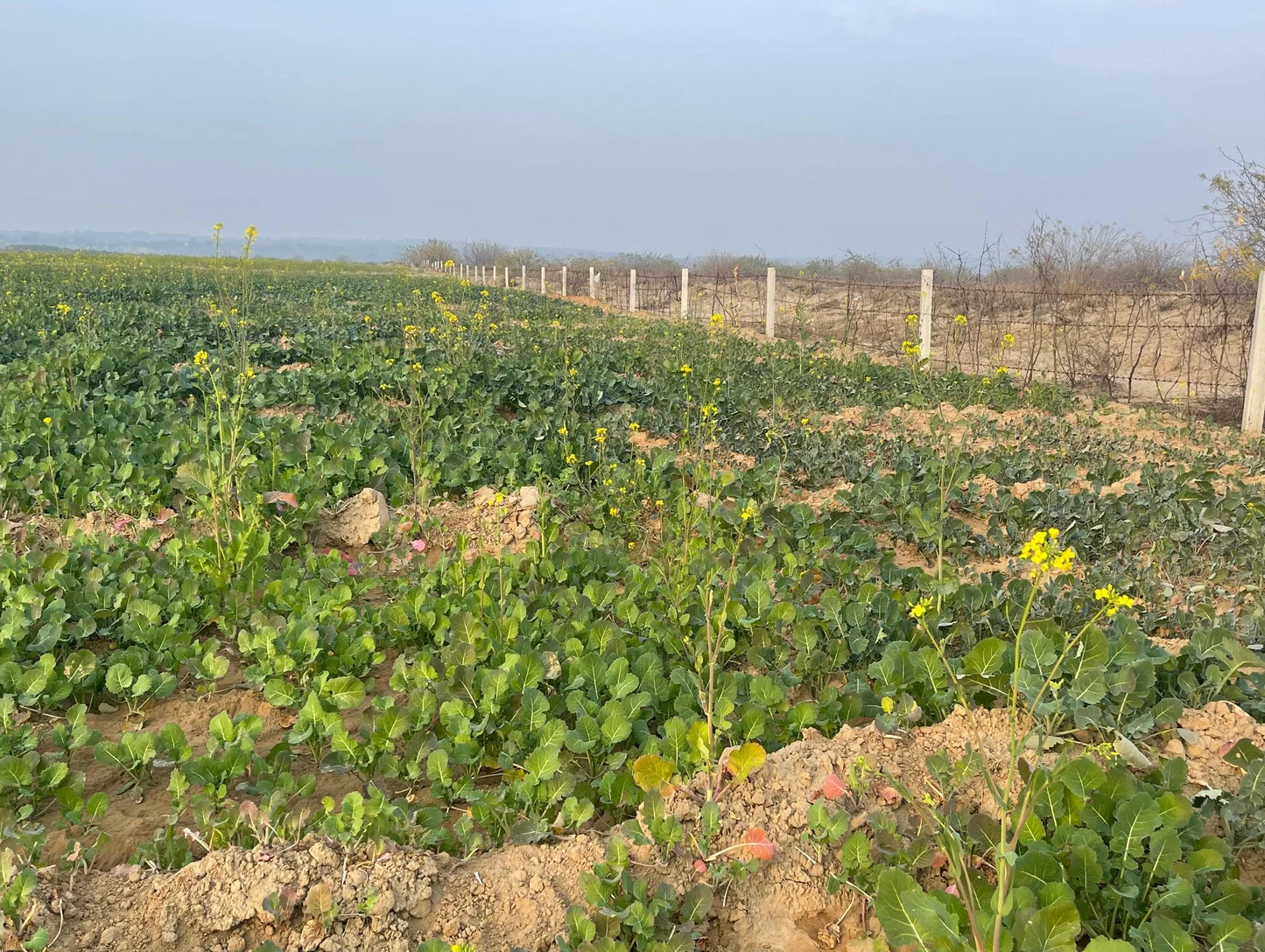
Grow wheat, pulses, vegetables and fruit orchards to support household food needs and potentially sell surplus produce.
Near Islamabad, Not Isolated
Located near the CPEC route in Talagang, with an advertised travel time of approximately 75 minutes from Islamabad, depending on route and traffic.
Security and Infrastructure
Gated boundaries, advertised 50-foot access roads and on-ground staff help support farm management, site visits and countryside living.
Build Your Own Family Base
Create your own cottage or farmhouse subject to applicable permissions, offering a countryside family base and greater freedom of space.
From Raw Land to Practical Farm Living
It is the difference between purchasing undeveloped land and choosing a community with agricultural infrastructure already planned or in place.
Explore the potential for income from farmland and learn about the most profitable crops to grow in Pakistan before planning your investment.
How to Start Your Off-Grid Transition
- Secure the land first: choose a PLRA-verified, developed plot with water and solar infrastructure already available. Contact us for a good farmland.
- Set up energy and water: install solar panels with battery storage and activate your solar tube well.
- Establish food production: begin with reliable crops and a kitchen garden, then add orchards and livestock as you grow.
- Build your shelter: construct a cottage or farmhouse as your permanent or weekend base.
- Transition gradually: start with weekends and seasonal stays, then scale toward full-time living as your systems mature.
Conclusion: Control in an Uncertain World
Ruralization is not a retreat from modern life — it is a strategic response to its instabilities. When inflation erodes savings, when energy and food prices spiral, and when cities grow more crowded and costly, owning productive, solar-powered land becomes one of the few genuine hedges a family can hold.
The crises are global and national, but the solution is deeply personal: a piece of land that feeds you, powers itself, and belongs to you. In 2026, with solar affordable and farmland accessible, that self-sufficient life is no longer a dream for the few – it is a practical choice for anyone ready to make it.