

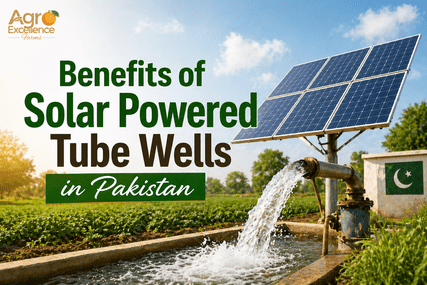
Benefits of Solar Powered Tube Wells in Pakistan
Benefits of solar powered tube wells in Pakistan are becoming a major topic as rising electricity costs and water scarcity continue to affect agriculture. Farmers and investors are actively searching for reliable, low-cost irrigation solutions. This guide explains how solar tube wells work, why they matter in 2026, and how they create strong agricultural investment opportunities in Pakistan—especially for overseas Pakistanis looking for passive income and sustainable farmland development.
What is a Solar Powered Tube Well?
A solar powered tube well is an irrigation system that uses solar panels to generate electricity, which powers a water pump to extract groundwater for farming. According to the Pakistan Council of Research in Water Resources, solar irrigation systems reduce dependency on grid electricity and fossil fuels.
Solar tube wells convert sunlight into energy through photovoltaic panels. This energy runs a motor pump that lifts water for irrigation. The system operates without fuel, making it ideal for remote and off-grid farmland.
Why Solar Tube Wells Matter in 2026
The benefits of solar powered tube wells in Pakistan are more important in 2026 due to rising energy costs and climate challenges. According to the World Bank, energy-efficient irrigation improves agricultural productivity and reduces operational costs.
Key Reasons:
- Electricity shortages affect irrigation schedules
- Diesel prices are continuously increasing
- Climate change is impacting water availability
- Sustainable farming is becoming essential
Research shows solar irrigation systems can reduce farming costs by up to 70% compared to diesel pumps. This makes them a strong option for modern farming techniques in Pakistan.
How to Install a Solar Tube Well
Installing a solar tube well requires proper planning and technical assessment. The standard approach is to follow a structured process:
Step-by-Step Guide:
- Assess Water Depth
Determine groundwater level using a professional survey. - Calculate Water Requirement
Estimate crop irrigation needs based on land size. - Select Solar Panel Capacity
Choose panels according to pump power requirements. - Install Pump System
Use submersible or surface pumps depending on depth. - Mount Solar Panels
Install panels in sunlight-exposed areas for maximum efficiency. - Connect Controller & Wiring
Use a solar inverter or controller for stable operation. - Test System Performance
Ensure proper water flow and energy conversion.
This process supports long-term sustainable farmland development and reduces operational risks.
What are the Key Benefits of Solar Powered Tube Wells in Pakistan?
The benefits of solar powered tube wells in Pakistan directly impact profitability, sustainability, and long-term investment returns.
Major Benefits:
- Zero Fuel Cost: Solar energy is free and renewable
- Low Maintenance: Fewer moving parts reduce repair costs
- Environment-Friendly: Reduces carbon emissions
- Reliable Irrigation: Works even in load shedding areas
- Long-Term ROI: Initial cost recovered within 3–5 years
According to the Alternative Energy Development Board, solar irrigation systems are a key part of Pakistan’s renewable energy strategy.
This makes solar systems ideal for agricultural investment opportunities in Pakistan.
Best Practices for Solar Irrigation
Using solar tube wells effectively requires proper management.
Smart Farming Tips:
Choose the Right Crops
Best crops for solar-irrigated land include:
- Wheat
- Sugarcane
- Vegetables (Tomato, Onion)
- Orchards (Mango, Citrus)
These crops match consistent water supply patterns.
Use Drip Irrigation
Drip irrigation reduces water wastage and improves efficiency.
Monitor Water Usage
Over-pumping can damage groundwater levels.
The standard approach is to combine solar systems with efficient irrigation methods for maximum output.
Common Mistakes to Avoid
Farmers often reduce system efficiency by making avoidable mistakes.
Avoid These Errors:
- Installing under-sized solar panels
- Ignoring groundwater depth analysis
- Poor panel placement (low sunlight exposure)
- No maintenance schedule
- Over-irrigation causing water wastage
Research shows improper system design reduces efficiency by up to 30%.
Solar vs Diesel Tube Wells Comparison
Understanding cost differences helps investors make better decisions.
| Factor | Solar Tube Well | Diesel Tube Well |
| Operating Cost | Very Low | Very High |
| Maintenance | Low | High |
| Environmental Impact | Eco-Friendly | Polluting |
| Lifespan | 20–25 years | 5–8 years |
| ROI | High | Low |
The cost-benefit analysis of solar pumps clearly favors solar systems for long-term gains.
Key Takeaways
- Solar tube wells reduce irrigation costs significantly
- They support sustainable farmland development
- Ideal for overseas Pakistanis seeking passive income
- Require proper installation and crop planning
- Offer long-term ROI and environmental benefits
Conclusion
The benefits of solar powered tube wells in Pakistan make them one of the smartest investments in agriculture today. They reduce costs, improve efficiency, and support sustainable farming. For investors—especially overseas Pakistanis—solar irrigation systems provide a reliable way to generate passive income while contributing to modern farming techniques in Pakistan.
FAQs
1. What are the benefits of solar powered tube wells in Pakistan?
Solar tube wells reduce fuel costs, provide reliable irrigation, and support eco-friendly farming. They improve farm productivity and offer long-term savings.
2. How much does a solar tube well cost in Pakistan?
Costs vary from PKR 5–15 lakh depending on system size, water depth, and panel capacity.
3. Is solar irrigation suitable for small farmers?
Yes, solar irrigation systems are scalable and work well for small farmers using low-capacity pumps.
4. What crops are best for solar irrigation?
Wheat, vegetables, sugarcane, and fruit orchards perform well with solar irrigation systems.
5. How long does a solar tube well last?
Solar panels typically last 20–25 years, while pumps may need replacement after 8–10 years.
6. Can solar tube wells work without batteries?
Yes, most systems operate directly during sunlight without batteries.
7. Are solar pumps better than diesel pumps?
Yes, solar pumps are more cost-effective, eco-friendly, and require less maintenance.
8. Is solar irrigation a good investment in Pakistan?
Yes, it offers high ROI and supports sustainable agriculture.