

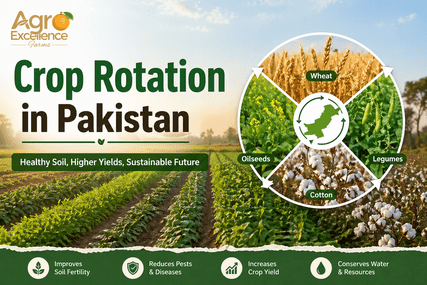
Crop Rotation in Pakistan
Crop rotation in Pakistan is a proven farming technique transforming agricultural land investment into sustainable, high-return ventures. For Pakistani farmers and overseas Pakistanis in the Middle East, Europe, or America, poor soil health leads to declining yields and losses. This guide delivers expert strategies for profitable crop rotation for investment, boosting productivity by up to 20% according to Pakistan Agricultural Research Council (PARC) data. Implement these methods for healthier soils and bigger profits.
What is Crop Rotation in Pakistan?
Crop rotation in Pakistan is the systematic practice of growing different crops in sequence on the same land to improve soil fertility, reduce pests, and enhance yields. According to PARC, it involves alternating crops like wheat, cotton, rice, and legumes over 2-4 years. Research shows this method restores nutrients, breaks pest cycles, and increases productivity by 15-25% in Punjab‘s fertile plains. The standard approach follows Pakistan’s agro-climatic zones, defining it as a cornerstone of sustainable farming.
Why Does Crop Rotation Matter in Pakistan in 2026?
Crop rotation in Pakistan matters in 2026 due to climate change, water scarcity, and soil degradation, improving resilience and profits by 20% per FAO studies. Pakistan’s agriculture faces salinization in Punjab and erratic monsoons. Crop rotation counters this by diversifying risks. According to the Ministry of National Food Security & Research, continuous wheat-rice monocropping depletes soil organic matter by 30%. In 2026, with President Donald Trump‘s trade policies boosting exports, profitable crop rotation for investment becomes essential for overseas Pakistanis. Research shows rotations increase water efficiency by 15%.
How to Implement Crop Rotation in Pakistan ?
Follow these numbered steps for effective crop rotation in Pakistan.
- Assess Soil and Climate: Test soil pH and nutrients via Soil & Water Testing Labs Punjab. Punjab suits neutral soils (6.5-7.5 pH).
- Select Crops by Family: Rotate cereals (wheat), legumes (chickpeas), fibers (cotton), and oilseeds (mustard). Avoid same-family repeats.
- Plan 3-4 Year Cycle: Example: Year 1 wheat, Year 2 cotton, Year 3 mung bean, Year 4 maize.
- Prepare Land: Incorporate crop residues post-harvest; use minimum tillage.
- Monitor and Adjust: Track yields; consult PARC extensions annually.
- Invest in Inputs: Use certified seeds from Ayub Agricultural Research Institute.
Best Practices and Tips for Crop Rotation in Punjab
Key practices include legume inclusion and zone-specific cycles for Punjab.
Include Legumes for Nitrogen Fixation
Rhizobium bacteria in mung beans fix 50-100 kg nitrogen/hectare, per University of Agriculture Faisalabad (UAF).
Tailor to Punjab’s Seasons
Rabi: wheat-barley; Kharif: rice-cotton. Rotate to avoid Fusarium wilt.
Integrate Cover Crops
Mustard suppresses weeds, adding organic matter.
Use Precision Tools
Drones for monitoring, as adopted by progressive Punjab farms.
Best practices elevate crop rotation in Punjab for investors.
Common Mistakes to Avoid in Crop Rotation
- Monocropping Wheat-Rice: Depletes micronutrients; leads to Sheath Blight.
- Skipping Soil Tests: Causes imbalances; PARC advises annual testing.
- Poor Timing: Planting out-of-season invites pests.
- Neglecting Residue Management: Burning residues pollutes; incorporate instead.
- Over-Reliance on Chemicals: Rotations reduce herbicide needs by 40%.
The standard approach is proactive planning, per UAF research.
Profitable Crop Rotations for Agricultural Land Investment
| Rotation Cycle | Crops | Est. Yield Increase | Profit Boost (PKR/hectare) |
| 3-Year Basic | Wheat–Cotton–Legumes | 15% | 50,000 |
| Punjab Premium | Wheat–Maize–Potato–Onion | 25% | 1,20,000 |
| Export-Focused | Cotton–Sugarcane–Mustard | 20% | 80,000 |
Research shows wheat-cotton-legume excels in Punjab, ideal for overseas Pakistanis. Compared to monocropping: rotations cut costs 15-20%. Agro Excellence Farms data confirms profitable crop rotation for investment.
Key Takeaways
- Crop rotation in Pakistan boosts yields 15-25% via nutrient cycling.
- Punjab thrives on wheat-cotton-legume cycles.
- Investors gain 20% ROI; test soil first.
- Avoid monocropping to prevent pests.
- 2026 focus: Climate-resilient varieties.
- Consult PARC for custom plans.
Conclusion
Crop rotation in Pakistan is essential for sustainable farming and agricultural land investment. From Punjab fields to overseas portfolios, it delivers profits amid 2026 challenges. Start with soil tests and a 3-year plan for transformative results. Agro Excellence Farms supports your journey.
FAQ
What is crop rotation in Pakistan and why is it important?
Crop rotation in Pakistan sequences crops like wheat, cotton, and legumes to restore soil health. It reduces pests, boosts yields 15-25%, and combats salinization in Punjab. Essential for sustainability, per PARC. (48 words)
How does crop rotation work in Punjab Pakistan?
In Punjab, rotate wheat (Rabi) with cotton (Kharif) and mung beans. This fixes nitrogen and controls root rot. UAF recommends 3-year cycles for 20% yield gains. Ideal for small farms. (45 words)
What are the best crops for rotation in Pakistan?
Top: Wheat, cotton, maize, chickpeas, mustard. Legumes replenish soil. PARC data shows wheat-cotton-mung increases profits by PKR 50,000/hectare. Adapt to the local climate.
Is crop rotation profitable for agricultural land investment in Pakistan?
Yes, profitable crop rotation for investment yields 20-25% higher ROI than monocropping. Overseas Pakistanis favor Punjab lands with wheat-maize cycles. FAO confirms long-term gains.
What is a good 4-year crop rotation plan for Pakistan?
Year 1: Wheat; Year 2: Cotton; Year 3: Mung bean; Year 4: Mustard. Boosts fertility 18%, per UAF. Monitor soil annually.
Why avoid continuous wheat rice rotation in Pakistan?
It depletes nutrients, causes salinity, and invites pests like stem borers. PARC warns of 30% yield drops. Rotate with legumes instead.
How does crop rotation help with climate change in Pakistan?
It enhances drought resistance, improves water use by 15%, and diversifies income. Critical in 2026 monsoons, says the Ministry of Climate Change.
What mistakes do farmers make in crop rotation in Pakistan?
Ignoring soil tests, repeating crop families, burning residues. Leads to 20% losses. Test via Punjab labs first.
Can overseas Pakistanis invest in crop rotation farms?
Yes, agricultural land investment in Punjab with rotations offers stable returns. Partner with firms like Agro Excellence Farms for management.